
A lawyer’s guide to understanding the refusal letter, identifying its real cause, and choosing the right pathway to overturn it.
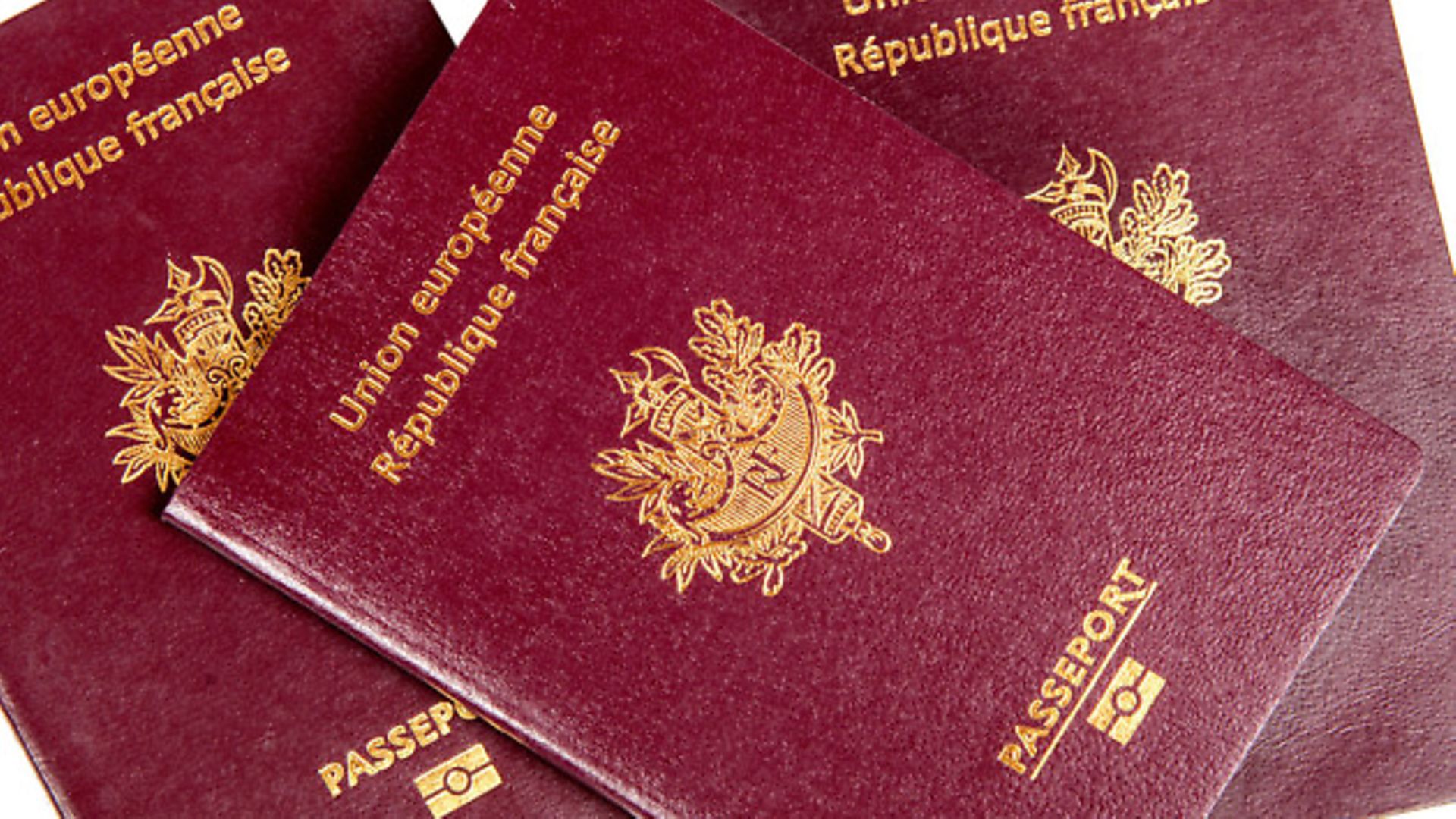
Few documents carry the symbolic and legal weight of the Certificat de Nationalité Française. Holders of a CNF have, in practical terms, the strongest possible peacetime proof that they are French. Conversely, a refusal letter from the registrar can feel devastating, especially after months of gathering civil records, translating foreign certificates and assembling decades of family history.
And yet, in the daily practice of French nationality law, a refusal is not a verdict. It is a procedural waypoint. It opens, rather than closes, a series of legal pathways. The single most important thing to understand on the day a refusal letter arrives is this: the law gives you the right to challenge it, and, in many situations, to obtain a result that is at least as strong as the CNF itself.
What the CNF Is, and Why a Refusal Is Not the Last Word
The CNF is issued by the directeur des services de greffe judiciaires of the competent tribunal judiciaire, the Tribunal Judiciaire de Paris for applicants residing abroad. Once delivered, it stands as the strongest peacetime proof of French nationality and protects the holder against any later administrative challenge to their status.
To deliver such a certificate, the registrar must be satisfied, on the face of the documents produced, that French nationality is established without ambiguity. If a single link in the chain (filiation, civil status, absence of loss) is unclear, the registrar will refuse rather than issue a CNF that could later be contested.
This is critical to grasp: a refusal is a documentary decision, taken at the level of a registrar’s office, not a judicial declaration of loss of nationality. The judiciary, the actual court, has not ruled on your case. Real legal pathways remain open.
Why CNFs Are Refused: The Real Reasons Behind the Letter
Refusal letters are often short. They cite a Civil Code provision and conclude that the file does not establish French nationality. To respond effectively, you have to translate that brief sentence into the substantive legal problem it is pointing at. In practice, the great majority of refusals fall into one of the following categories.
1. Gaps in the chain of filiation
A missing or incomplete birth certificate, a parent not recognised on the record, or an adoption whose effects on nationality are not clarified. The chain from the French ancestor to the applicant must be unbroken and documented.
2. Insufficient proof that the ancestor was French
A French-sounding surname is not evidence of nationality. The registrar requires civil records, consular registrations, French identity documents or notarial acts establishing the ancestor’s French status at the relevant time.
3. Foreign naturalisation before 1973
Before the 1973 reform, voluntary acquisition of a foreign nationality automatically caused loss of French nationality (former Articles 87 and 88 of the Civil Code). A refusal may rest on a finding that an ancestor was naturalised abroad in a way that broke the chain.
4. Documentary deficiencies
Foreign civil records that are not properly legalised, apostilled or translated by a sworn translator. Non-compliant records do not establish anything before a French registrar, regardless of their substantive accuracy.
5. Loss of probative documentation
Even where French nationality has not legally been lost, the disappearance of the underlying records (consular archives, original birth records, lost livrets de famille) can defeat a CNF application that does not otherwise reconstruct the evidentiary chain.
6. Civil status not transcribed in France
Birth, marriage or recognition acts of foreign origin that have never been transcribed into the French civil registry can cause the registrar to treat the underlying filiation as not established, even when the documents themselves are perfectly authentic.
7. Errors of legal qualification
It does happen. Registrars handle a vast and technical body of law and occasionally apply a rule incorrectly to a particular family situation. A trained legal eye can detect these errors and correct them on appeal.
The hidden danger. A refusal that is not properly handled can become the foundation of a future judicial declaration that French nationality has been definitively lost. This is not a theoretical risk: a poorly framed reapplication that simply reasserts the original arguments can entrench the refusal rather than dislodge it.
Decoding Your Refusal Letter
The first task, on receiving a refusal, is to extract from it the precise legal reasoning the registrar relied upon. Look for explicit references to Civil Code provisions and to the specific document deemed missing or insufficient. Each provision points to a different legal regime, and each calls for a different evidentiary response.
If the letter references former Articles 87 or 88, the issue is loss of French nationality by voluntary acquisition of a foreign one before 1973. If no specific article is cited and the refusal speaks only of “insufficient evidence” or “filiation not established”, the issue is documentary, and entirely fixable, provided the right records can still be obtained or properly transcribed.
The Two Pathways After a CNF Refusal
Since the abolition of the hierarchical appeal in 2022, French law concentrates the response to a CNF refusal around two distinct avenues. They are not mutually exclusive, but choosing the right one, and the right sequence, is decisive.
1. A New CNF Application
You may submit a fresh CNF application, supplemented by additional evidence and improved legal framing. This is often the right course where the refusal turned on missing or insufficiently legalised civil records, and where those documents can now be obtained, apostilled and translated, or where a foreign civil status act can now be transcribed into the French registry.
A renewed application should never simply repeat the original. It must respond, point by point, to the registrar’s reasoning, supplying new documents, sworn affidavits where appropriate, and clear legal explanations linking each piece of evidence to the elements of nationality being established. Done properly, a renewed application is often the fastest route from a refusal to a CNF in hand.
2. Contesting the Refusal Before the Juge Judiciaire
Where reapplication is not the right path, or has already failed, the refusal can be contested before the juge judiciaire. For applicants residing abroad, the competent court is the Tribunal Judiciaire de Paris. The ministère public is the procedural opponent and representation by a French avocat is mandatory.
A favourable judgment definitively establishes French nationality, is mentioned in the civil registry and binds the administration. It carries the same probative weight as a CNF and is, in many cases, the appropriate response where the registrar’s refusal is unlikely to be reversed by simple reapplication but the underlying nationality position remains legally sound.
Strategic note. Bringing the refusal before the juge judiciaire is not an administrative appeal; it is full litigation before a court of law. The refusal letter becomes an exhibit in the case, but the court is not bound by it; it weighs the evidence and rules on the question of nationality on its own terms.
What the Right Strategy Looks Like in Practice
The choice between a renewed application and bringing the matter before the juge judiciaire is rarely intuitive. A clean documentary refusal (missing transcription, untranslated record, overlooked piece of evidence) usually calls for a new CNF application. A complex case turning on contested filiation, foreign naturalisation, or a registrar’s error of law often calls for judicial review, where a court can weigh evidence and rule on legal questions in a way a registrar cannot.
The right strategy also takes account of related procedures running in parallel. In some cases, a transcription of foreign civil records into the French registry should be secured before any new nationality application is filed. In others, going directly to the juge judiciaire is the only realistic route to a definitive solution. Sequencing is everything.
A CNF refusal is not a closed door. It is an unfinished legal question, and it is a question that French law allows to be reopened, on the right legal terms, before the right authority.
Why Acting Promptly Matters
Time works against the file. Consular records get archived offline. Foreign civil registry copies become harder to obtain. Witnesses age. Family memory fades. The longer the file is left untouched after a refusal, the harder reconstruction becomes, and the higher the risk that an evidentiary gap which was fixable in year one becomes structural in year five.
For applicants whose own children’s nationality depends on theirs being recognised, the urgency multiplies. A refusal that is left in place can become the documentary foundation on which the next generation’s claim is later denied.
Frequently Asked Questions
Is a CNF refusal final?
No. A refusal is a documentary position taken by the registrar of the competent tribunal. It does not, on its own, deprive you of French nationality. You retain the right to reapply with new or better-organised evidence, or to contest the refusal before the juge judiciaire (the Tribunal Judiciaire de Paris for applicants residing abroad).
How long do I have to act after a CNF refusal?
There is no rigid statute of limitations to reapply for a CNF or to bring the refusal before the juge judiciaire. However, the longer you wait, the higher the risk that supporting documents (consular records, civil registry extracts, witness evidence) become harder to retrieve. Strategic action shortly after the refusal is strongly recommended.
Can I reapply for the CNF after a refusal?
Yes. A new CNF application is admissible at any time, particularly when supported by additional or better-organised evidence. However, simply resubmitting the same file rarely changes the outcome. The new application should respond directly to the reasons given in the refusal letter, with newly produced documents, expert legal argument and, where appropriate, supporting affidavits.
How is a CNF refusal contested in court?
A CNF refusal can be challenged before the juge judiciaire of the Tribunal Judiciaire de Paris (the competent court for applicants residing abroad). The ministère public is the procedural opponent, and representation by a French avocat is mandatory. A favourable judgment has the same probative weight as a CNF and is mentioned in the civil registry.
Does a CNF refusal mean I have lost French nationality?
Not necessarily. A refusal means the registrar was not satisfied that the evidence on file proved French nationality. It does not, by itself, declare loss of nationality. However, certain refusals are based on substantive findings that, if confirmed by a court, may result in a judicial declaration that nationality has been lost. This is precisely why the response to a refusal must be carefully strategised.
Do I need a lawyer to challenge a CNF refusal?
For a renewed CNF application, a lawyer is not formally required, but a French attorney experienced in nationality law dramatically increases the chances of success. To contest the refusal before the juge judiciaire, representation by a French avocat is mandatory.
Your CNF Has Been Refused. What Comes Next Is Decisive.
Blue Bridge Law assists clients worldwide in challenging CNF refusals, whether by renewed application or by contesting the refusal before the juge judiciaire of the Tribunal Judiciaire de Paris. Each refusal is different. The strategy must be too.
Request a Confidential Case Review
Need Legal Assistance in France?
Yuliana Colorado, avocate at the Paris and Madrid bars, works in English, French and Spanish. Get guidance on your own situation.

